





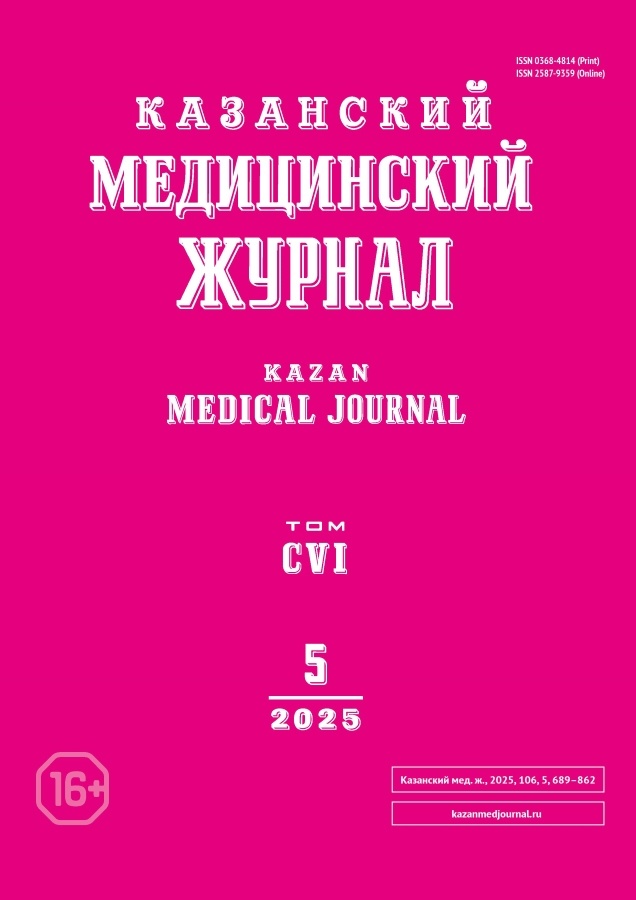
Kazan medical journal

Medical peer-review journal for physicians and researchers.
Founders
- Kazan State Medical University
- Eco-Vector
Publisher
- Eco-Vector
WEB: https://eco-vector.com/
Editor-in-Chief
- Ayrat U. Ziganshin, MD, PhD, Professor.
ORCID: 0000-0002-9087-7927
About
Kazan Medical Journal is a peer-reviewed journal for clinicians and medical scientists, practicing physicians, researchers, teachers and students of medical schools, interns, residents and PhD students interested in perspective trends in international medicine.
Missions of the Journal are to spread the achievements of Russian and international biomedical sciences, to present up-to-date clinical recommendations, to provide a platform for a scientific discussion, experience sharing and publication of original researches in clinical and fundamental medicine.
The Kazan Medical Journal reflect actual problems of therapy, surgery, obstetrics and gynecology, oncology, pulmonology, neurology and psychiatry, orthopedics and traumatology, social hygiene, etc. The journal publishes papers describing modern methods of treatment and diagnosis using the latest medical equipment, allowing practitioners to become acquainted with the latest achievements in the field of medicine.
Indexing
- SCOPUS
- Russian Science Citation Index
- BIOSIS Previews
- Biological Abstracts
- CNKI
- Google Scholar
- Ulrich's Periodical directory
- Dimensions
- Crossref
Published bimonthly since 1901, distributed by subscription.
Current Issue
 Open Access
 Access granted
 Subscription or Fee Access
Vol 106, No 5 (2025)
- Year: 2025
- Published: 05.10.2025
- Articles: 17
- URL: https://kazanmedjournal.ru/kazanmedj/issue/view/13710

Theoretical and clinical medicine
Role of microvesicles and netosis in coagulopathy in patients with SARS-CoV-2 infection: a randomized clinical trial
Abstract
BACKGROUND: The high incidence of thrombotic complications in patients with SARS-CoV-2 infection significantly worsens the prognosis of the disease. The primary issue is limited comprehension on the mechanisms by which systemic inflammation, neutrophil activation, extracellular neutrophil traps, and microvesicle-mediated hemostasis disorders are interconnected.
AIM: This study aimed to investigate the link between microvesicles and extracellular neutrophil traps and the occurrence of coagulopathies in patients with SARS-CoV-2 infection. The quantitative and qualitative characteristics of these phenomena were assessed based on the severity of the patients’ condition.
METHODS: The study included 213 patients with SARS-CoV-2 infection (138 patients with moderate disease and 75 with severe disease) and 20 healthy donors. The patients underwent blood chemistry, coagulation, and hematology tests. A quantitative analysis of microvesicles was performed using flow cytometry with monoclonal antibodies specific for surface markers (CD45, CD3, CD14, CD15, and CD61). The interaction of microvesicles with extracellular neutrophil traps was observed by confocal microscopy (Leica TCS SP5) using fluorescent labels (DAPI, FITC, APC, and PE) and subsequently analyzed for colocalization using a LAS AF package. Statistical analysis was conducted using the Student’s t-test, Spearman’s correlation coefficient, and linear regression methods.
RESULTS: The patients with moderate SARS-CoV-2 infection had hypercoagulation (fibrinogen, 4.8 [4.00; 5.60] g/L; D-dimer, 0.78 [0.30; 1.28] mg/L), with increased levels of neutrophil-derived (CD15⁺, 53.34% ± 6.92%) and platelet-derived (CD61⁺, 59.74% ± 11.22%) microvesicles. Tissue factor-enriched filamentous extracellular neutrophil traps with microvesicles were identified. The severe cases were associated with decreased levels of neutrophil-derived (CD15⁺, 10.32% ± 4.29%) and platelet-derived (CD61⁺, 20.9% ± 6.01%) microvesicles, thrombocytopenia (139.5 [104.25; 177.75] × 10⁹/L), hypocoagulation (international normalized ratio: 2.60 [2.32; 3.58]), and CD62⁺-positive aggregates.
CONCLUSION: Microvesicles and extracellular neutrophil traps play a key role in dysregulated hemostasis in patients with SARS-CoV-2 infection. Early hypercoagulation is mediated by their procoagulant activity, and severe cases are associated with decreased levels of peripheral microvesicles, which is indicative of consumptive coagulopathy.
 693-706


Ischemic heart disease after SARS-CoV-2 infection: a cross-sectional study
Abstract
BACKGROUND: The incidence of newly diagnosed stable angina after a SARS-CoV-2 infection remains high. However, studies on the clinical, functional, and laboratory characteristics of this disease are inadequate. The manifestations of ischemic heart disease (IHD) following SARS-CoV-2 infection require further investigation to elucidate the pathophysiological mechanisms and personalize follow-up care.
AIM: This study aimed to compare the clinical, functional, laboratory, and angiographic characteristics of stable angina in patients diagnosed with IHD following SARS-CoV-2 infection.
METHODS: This cross-sectional study assessed patients’ medical histories, along with clinical, laboratory, and instrumental findings. The study enrolled 428 patients with stable IHD and documented SARS-CoV-2 infection (within 3–18 months of the onset of the disease). Group 1 (n = 195) consisted of patients with newly diagnosed IHD, and group 2 (n = 233) included patients with previously diagnosed IHD, with the infection being documented to have occurred ≥12 weeks prior to study enrollment. IHD was diagnosed through a comprehensive evaluation that included clinical presentation, electrocardiographic analysis, echocardiographic imaging, stress tests, and coronary angiography. Blood chemistry was performed using standardized methods. Statistical analysis was carried out in RStudio. Continuous variables were compared using the Mann–Whitney U test, whereas the comparison of binary and categorical variables was conducted using Fisher’s exact test. The critical significance level was set at p = 0.05.
RESULTS: Group 1 was significantly younger (p = 0.009), had a lower body mass index (p < 0.001), and had a shorter history of hypertension (p < 0.001). These patients exhibited higher prevalence of functional class I angina pectoris (p = 0.006), NYHA class II chronic heart failure (p = 0.005), and lower prevalence of ventricular extrasystole (p = 0.002). Coronary angiography demonstrated that group 1 showed higher prevalence of unchanged coronary arteries (p = 0.003) and hemodynamically insignificant stenoses (p = 0.018), but lower proportion of hemodynamically significant stenoses (p < 0.001). There were no significant differences found in the occurrence of multifocal atherosclerosis (p = 0.132). The treadmill test revealed comparable positive results across both groups (p = 0.479). However, group 1 exhibited a higher frequency of inconclusive results (p = 0.011). The laboratory profile of patients from group 2 showed increased Lp(a) (p = 0.023), triglycerides (p = 0.003), apoB (p = 0.022), NT-proBNP (p = 0.010), D-dimer (p = 0.001), high sensitivity C-reactive protein (p = 0.012), and cystatin C (p = 0.001), as well as higher fasting glucose (p = 0.030), but comparable HbA1c levels (p = 0.750).
CONCLUSION: Patients who develop stable angina following SARS-CoV-2 infection demonstrate a less severe clinical and functional phenotype, less significant coronary atherosclerosis, and more favorable biomarker profile than those with previously diagnosed IHD who had SARS-CoV-2 infection.
707-716
Short-term and long-term outcomes of breast-conserving surgery in patients with breast cancer: a non-randomized clinical trial
Abstract
BACKGROUND: Surgical advances in breast cancer contribute to improving the postoperative quality of life.
AIM: The study aimed to evaluate the short-term and long-term outcomes of breast-conserving surgery.
METHODS: The study included the treatment outcomes reported for 194 patients diagnosed with breast cancer who had been admitted to the Samara Regional Clinical Cancer Hospital between 2011 and 2020. Group 1 (n = 96) included patients who had undergone conventional breast-conserving surgeries. For group 2 (n = 98), a modified approach, described as “Choosing the extent of surgery for patients diagnosed with breast cancer,” was used. This technique involved the placement of the lateral adipocutaneous flap in the axillary region, with the free edge positioned as close to the nervus thoracicus longus as possible. The analysis focused on operative time and intraoperative blood loss. The disease-free and overall survival probabilities were estimated using the Kaplan–Meyer method. The patients were also asked to complete the Breast-Q questionnaire prior to surgery and six months after the treatment. The statistical analysis was performed using the parametric (Student’s t test) and non-parametric (Mann–Whitney test, chi-squared test [χ2], and Fisher’s exact test) methods. The significance level was set at p < 0.05.
RESULTS: The short-term surgical outcomes were not significantly different between the groups. The mean operative time was 76.3 ± 23.3 minutes in group 1 and 65.5 ± 18.3 minutes in group 2 (p < 0.001), with the intraoperative blood loss recorded at 53.1 ± 26.2 mL and 49.0 ± 14.3 mL, respectively (p = 0.18). Postoperatively, persistent non-infected seroma (>14 days) was identified in 19 patients from group 1 and 7 patients from group 2 (p = 0.009).
CONCLUSION: The proposed method provides a significant reduction in the incidence of complications, with long-term outcomes comparable to those observed in the conventional treatment group.
717-723
Efficacy of enteral saline solution by measuring I-FABP in patients with severe acute pancreatitis: a non-randomized clinical study
Abstract
BACKGROUND: Intestinal microcirculatory injuries in patients with severe acute pancreatitis result in neuroendocrine dysregulation, intestinal epithelial cell dysfunction, and impaired intestinal motility.
AIM: This study aimed to assess the efficacy of enteral corrective therapy of intestinal failure in patients with severe acute pancreatitis using an enteral saline solution.
METHODS: A multicenter, non-randomized clinical study included 146 patients with severe acute pancreatitis (112 [76.7%] males and 34 [23.3%] females, mean age: 50.8 [SD ± 13.7] years). The patients were divided into two groups. The control group included 52 patients (35 [67.3%] males and 17 [32.7%] females, mean age: 50.9 [SD ± 15.0] years) who received standard of care. The treatment group included 94 patients (69 [73.4%] males and 25 [26.6%] females, mean age: 46.6 [SD ± 9.5] years) who additionally received enteral therapy using an enteral saline solution. The solution’s composition was identical to that of chyme from the first part of the small intestine in apparently healthy individuals. Its acidic environment (pH 5.0–5.8) has a bacteriostatic effect and inhibits the growth of opportunistic and pathogenic microorganisms. Enteral therapy was provided via a nasointestinal tube, which was placed along the endoscopic instrument channel and attached to the ligament of Treitz. The solution (1500 mL) was administered at a rate of 6–10 mL/min with intra-abdominal pressure monitoring, which did not exceed 16 mmHg. The Mann–Whitney U test was used for intergroup comparisons. Differences were considered significant at p < 0.05.
RESULTS: The treatment group showed a decrease in intestinal injury marker (I-FABP) levels the day after starting enteral therapy. On days 2 and 7, there was a significant decrease in intestinal fatty acid binding protein (I-FABP) levels to 1.52 ng/mL (p = 0.049) and 1.42 ng/mL (p = 0.01), respectively. These values were comparable to the median I-FABP level in the control group (1.40 ng/mL), which was used as a reference. On day 2, the threshold value was comparable to the reference (p = 0.049), with a significant decrease on day 7 (p = 0.01).
CONCLUSION: The findings confirm the efficacy of the enteral saline solution in patients with severe acute pancreatitis.
734-743
Risk factors for thromboembolic events and bleeding in patients with stomach cancer: a cohort study
Abstract
BACKGROUND: Stomach cancer is associated with systemic disturbances, including impaired hemostasis, which may result in thrombosis and bleeding, significantly affecting the prognosis, quality of life, and risk of fatal outcome.
AIM: The study aimed to identify risk factors for thrombosis and bleeding in patients with stomach cancer, assess the prognostic value of existing risk scores using a retrospective analysis of our own findings, and propose ways to improve them.
METHODS: The study analyzed medical records of 178 patients with stomach cancer who were treated at Sechenov University in 2021–2023. The medical records were grouped based on two independent variables: the presence of thromboembolic events (25 patients with and 150 patients without thromboembolic events) and the presence of bleeding (23 patients with and 155 patients without bleeding). The outcomes were assessed by examining imaging findings (ultrasound and computed tomography) specified in medical records, which allowed confirming or ruling out thromboembolic events, as well as initial examination findings and discharge summaries following hospitalization for chemotherapy. Qualitative variables are presented as mean ± standard deviation, whereas categorical variables are presented as absolute values and percentages. Intergroup differences were assessed using the Mann–Whitney and Pearson’s chi-squared tests. Significant associations for thromboembolic events and bleeding were identified using multivariate regression analysis. The prognostic value of scores was assessed using ROC analysis (AUC, sensitivity, specificity). SPSS 23.0 was used for statistical analysis.
RESULTS: Patients with chronic heart failure had an 11-fold greater risk of thromboembolic events than patients without chronic heart failure (odds ratio [OR] 11.12; 95% confidence interval [CI] 3.14–38.74; p = 0.001). Chronic kidney disease was associated with more than a 5-fold greater risk (OR 5.07; 95% CI 2.02–12.71; p = 0.002), and varicose veins with more than an 8-fold greater risk (OR 8.12; 95% CI 2.87–22.94; p = 0.001). Adding these factors to the Khorana score improved its prognostic value: in ROC analysis, AUC was 0.823 compared to 0.615 at baseline. This indicates a high discriminatory capability of the modified model (AUC > 0.8). The REACH score showed a high prognostic value for assessing the risk of bleeding (AUC = 0.738).
CONCLUSION: Adding chronic heart failure, chronic kidney disease, and varicose veins to the Khorana score improves its prognostic value for assessing the risk of thromboembolic events. The REACH score was effective in predicting the risk of bleeding.
724-733
Hormonal and immunological changes under complex stress in patients with different predominant temperamental activity
Abstract
BACKGROUND: To prevent various diseases and develop personalized treatment strategies, data are required on the immunological and hormonal changes under complex stress in respondents with different temperamental activity.
AIM: To study hormonal and immunological changes in respondents with different temperamental activity under complex stress.
METHODS: A total of 251 volunteers were examined (46% male, mean age 35.80 ± 9.48 years). Experimental groups were created by the ratio of different types of temperamental activity, i.e. psychomotor (n = 75), intellectual (n = 59), and communicative (n = 88). Venous blood samples were drawn before and after a complex stress, including psychomotor, intellectual, and communication tests. We assessed hormone levels (cortisol, epinephrine, norepinephrine, serotonin, and dopamine), genotypes (BDNF, COMT), and cytokines (IL-4, IL-6, IL-10, TNF-α). Statistical tests included Pearson chi-square test, Wilcoxon signed-rank test (W test), Mann–Whitney test (U test), Kruskal–Wallis test (H test), and Spearman’s rank correlation coefficient.
RESULTS: Complex stress in respondents with a predominantly psychomotor temperamental activity is associated with a decrease in serum cortisol (W = 6.187, p < 0.001) and an increase in epinephrine (W = 4.349, p < 0.002) and IL-4 (W = 3.601, p < 0.01). Changes in cortisol correlate with changes in norepinephrine (rs = 0.318, p = 0.006). Changes in serotonin negatively correlate with changes in IL-6 (rs = −0.324, p = 0.005). Changes in IL-6 correlate with changes in TNFα (rs = 0.424, p < 0.001). IL-6 decreases from 21.6 to 2.8 pg/ml (W = 2.525, p = 0.012). Complex stress in respondents with a predominantly intellectual temperamental activity is associated with a decrease in serum cortisol (W = 5.174, p < 0.001) and an increase in norepinephrine (W = 3.049, p < 0.002) and IL-4 (W = 2.582, p < 0.01). Changes in epinephrine correlate with changes in norepinephrine (rs = 0.382, p = 0.003) and dopamine (rs = 0.325, p = 0.012). Changes in serotonin negatively correlate with changes in IL-6 (rs = 0.264, p = 0.044). IL-10 decreases from 6.4 to 5.9 pg/ml (W = 3.313, p < 0.001). Complex stress in respondents with a predominantly communicative temperamental activity is associated with a decrease in cortisol (W = 7.914, p < 0.001) and an increase in norepinephrine (W = 3.318, p < 0.002) and IL-4 (W = 4.238, p < 0.01). Changes in epinephrine is associated with changes in norepinephrine (rs = 0.215, p = 0.045) and cortisol (rs = 0.239, p = 0.026). IL-10 decreases from 7.1 to 6.2 pg/ml (W = 5.449, p < 0.001).
CONCLUSION: We identified special hormonal and immunological changes in the blood serum under complex stress in respondents with different predominant temperamental activity.
744-754
Psychological responses to treatment of impacted canines in young patients: a randomized clinical study
Abstract
BACKGROUND: Implementing a psychosomatic approach to the diagnosis and treatment of patients with malocclusion is critical in dentistry.
AIM: This study aimed to assess psychological responses to various treatment methods for impacted canines in young patients using the Psycho-Sensory-Anatomical-Functional Maladjustment Syndrome questionnaire.
METHODS: The study included 44 patients (17 males and 27 females) with impacted maxillary canines aged 18–44 years. Based on treatment method, the patients were divided into two groups: group 1 (main group), spontaneous eruption; and group 2 (comparison group), closed eruption. The mean age of the patients in groups 1 and 2 was 27.6 ± 0.18 years and 26.2 ± 0.11 years, respectively. The control group comprised 15 age-matched individuals (7 males and 8 females) without malocclusion and psychosomatic disorders who had not received previous orthodontic treatment. Patients’ self-perception of disease was evaluated using an analog scale for self-assessment of the severity of individual symptoms. Statistical analysis was performed using Statistica 7.0 and the Pearson’s chi-squared test for nonparametric data. The significance level was set at p ≤ 0.05.
RESULTS: Patients in the closed eruption group experienced discomfort for 9 months longer due to fixed appliances. This negatively affected their adaptation to daily life (S = 10.27 conventional units) compared to patients in the spontaneous eruption group (S = 6.27 conventional units) (p = 0.0024). Furthermore, these findings were associated with prolonged active orthodontic treatment (p = 0.0013).
CONCLUSION: Impacted canine treatment by spontaneous eruption provides a more positive self-perception of health over a longer period.
755-762
Experimental medicine
Long-term efficacy of poly(L-lactide-co-ε-caprolactone) threads with hyaluronic acid nanoparticles: an in vivo skin remodeling study
Abstract
BACKGROUND: Modern thread-lifting techniques aim to achieve an immediate mechanical lifting effect and provide a prolonged biostimulatory action directed at remodeling dermal structures.
AIM: This study aimed to perform a histomorphological evaluation of the effects of monofilament P(LA/CL)-HA-nano threads on skin remodeling in a biomedical experiment and compare their outcomes with those of P(LA/CL)-HA threads and intact skin.
METHODS: The study included five clinically healthy female Large White pigs aged 4 months weighing 40 ± 1.2 kg on average. Each animal underwent implantation of two types of threads: P(LA/CL)-HA and P(LA/CL)-HA-nano. Euthanasia of the animals and histomorphological analysis were performed on days 7, 21, 30, 90, and 180. Intact skin was considered the control. The following parameters were assessed: dermal thickness, content of type I and type III collagen fibers, and elastin levels. Histological staining included hematoxylin and eosin, Weigert–Van Gieson, and Picrosirius Red with polarized light analysis. Statistical analysis was conducted using the Wilcoxon signed-rank test. Differences were considered significant at p < 0.05.
RESULTS: P(LA/CL)-HA-nano thread implantation resulted in significantly increased dermal thickness (day 180, p = 0.0431), increased type I collagen density in the dermis (day 90, p = 0.0431) and hypodermis (all time points, p < 0.05), and enhanced type III collagen synthesis in the hypodermis from day 21 (p = 0.0431). A significant increase in elastin levels in the dermis was observed on days 90 and 180 (p = 0.0431). Distinct kinetics of tissue remodeling were noted compared with non-modified P(LA/CL)-HA threads.
CONCLUSION: P(LA/CL)-HA-nano threads exhibit pronounced bioactive properties, promoting structural remodeling of skin tissues.
763-775
Meta-analysis of transcriptome profiles of B16 melanoma cells after in vivo treatment with dacarbazine
Abstract
BACKGROUND: Phenotypic plasticity and heterogeneity of melanoma cells arising from epigenetic regulation and the activity of transcription factors is pivotal in chemoresistance. Therefore, there it is necessary to explore the molecular mechanisms underlying resistance to alkylating agents, such as dacarbazine.
AIM: This study aimed to analyze transcriptome profiles of B16 melanoma cells after in vivo treatment with dacarbazine to identify key clusters of differentially expressed genes and regulatory transcription factors associated with chemoresistance.
METHODS: The study used a C57Bl/6 mouse model of B16 melanoma. The animals were randomly allocated into a control group and an experimental group, each with 12 mice. The experimental group was treated with dacarbazine at 50 mg/kg. Total RNA was extracted from tumor tissue, before high-throughput sequencing was performed. Data were subjected to bioinformatic processing for gene clustering and prediction of transcription factors for analyzing motifs in RNA sequences.
RESULTS: NGS sequencing and bioinformatic analysis yielded 670 differentially expressed genes, which were organized into 12 functional clusters related to DNA repair, apoptosis, and cell cycle. A comprehensive analysis identified key transcription factors (RELB, IRF5/7/4, NANOG, SOX2, LEF1, and NFKB2) that regulate signaling pathways essential for maintaining pluripotency (p = 0.000001), Wnt (p = 0.000753), TGF-β (p = 0.002631), Toll-like receptors (p = 0.000776), and NF-κB (p = 0.044609) associated with B16 melanoma cell resistance to the alkylating agent dacarbazine in vivo.
CONCLUSION: The findings of this study indicated that the epigenetic and transcription mechanisms of chemoresistance in melanoma cells involves maintenance of the stem cell phenotype, regulation of the immune response, and activation of the epithelial-mesenchymal transition.
776-786
Reviews
Detecting endothelial dysfunction by hemostasis testing in acute appendicitis
Abstract
Endothelial dysfunction plays a critical role in the pathogenesis of various acute and chronic conditions. It is a pathological state characterized by progressive damage to endothelial cells and their function. Endothelial dysfunction has long been studied in various disorders using several methods. It is caused by pro-inflammatory and prothrombotic factors. Coagulation disorders are not always detected by routine coagulation tests, and their nature is unclear. Published data indicate that hypercoagulation is expected in inflammation. However, local inflammation does not always result in thrombogenesis, causing a prethrombotic state. Assessment of the coagulation system is required to confirm a prethrombotic state. Changes in thromboelastometry findings may be used to assess the degree of endothelial dysfunction, which may depend on the severity of inflammation. Therefore, thromboelastometry findings may be clinically significant for determining the degree of endothelial dysfunction in various forms of acute appendicitis and for evaluating the risk of complications. This study investigated the pathogenetic aspects of acute appendicitis that are associated with endothelial dysfunction, particularly latent hypercoagulation and its detection. Review of published data emphasized the need for further research on the subject. Research into the pathophysiology of coagulation disorders as a manifestation of endothelial dysfunction will provide better understanding on the pathogenetic aspects of acute abdominal diseases.
787-795
An overview of the microelectromechanical systems employed in cardiology practice: operating principles, diagnostic potential, and future applications
Abstract
Cardiovascular diseases remain the leading cause of worldwide mortality. Recent advancements in microelectronics have created novel opportunities for the development of innovative, intelligent devices that can perform unique electromechanical functions. Microelectromechanical systems are microscopic devices measuring between 20 and 1000 µm and integrated with microelectronics. They are used in the diagnosis and treatment of diseases, monitoring body functions, and in bioprosthetics. They possess the potential to improve the diagnosis, treatment, and prevention of life-threatening conditions. The advent of mobile technologies has led to the development of novel approaches that can enhance the efficiency of healthcare systems. Medical telemetry systems enable the remote measurement of physiological parameters via wireless technology. Implantable medical devices offer a wide range of diagnostic and therapeutic applications. This article provides an overview of current research focusing on implantable microelectromechanical systems with remote signal transmission in cardiology practice, describes in detail their practical operating principles and information transmission mechanisms, and reports the findings of their application in clinical trials. A comprehensive review of relevant publications suggests that this branch of medicine can be widely employed in clinical practice, enabling the personalized monitoring of patients and the prevention of life-threatening complications.
796-809
Cardiovascular diseases and personality type
Abstract
Cardiovascular diseases are a leading cause of death, especially in developed countries. As new evidence-based medical findings emerge, the range of risk factors for cardiovascular diseases expands. Modern cardiology acknowledges that the development of a cardiovascular risk management system is critical. Psychological aspects, including personality, emotional regulation, and associated behaviors, have been found to contribute to cardiovascular disease onset and progression. This review summarizes and systematizes information from clinical studies and systematic reviews published through PubMed and eLIBRARY.RU. These databases were searched for articles detailing how personality types may influence the clinical course and prognosis of cardiovascular diseases through the interplay with various biological and behavioral factors. Moreover, this study provides an overview of personality types A, B, AB, and D and the methods for their identification. These methods include the Jenkins and Wasserman–Gumenyuk questionnaires, which were adapted for the Russian-speaking population to align with the cultural context, focusing on identifying personality type D (DS-14). Enhancing medical professionals’ awareness of personality traits and their role in cardiovascular diseases can facilitate deeper understanding of the causes of patient maladaptation and improve the effectiveness of strategies for preventing complications. Targeted and prompt psychotherapeutic interventions will contribute to the modification of negative aspects, decrease cardiovascular event risk, increase treatment compliance, and increase life expectancy.
810-818
Immunomodulatory effect of multipotent stromal cells
Abstract
Multipotent stromal (stem) cells are currently the subject of extensive research. Initially, special attention was given to their reparative properties; however, in recent years, the focus switched toward their immunomodulatory effects. Multipotent cells inhibit T cell proliferation (directly and via exosomes), suppress proinflammatory cytokine production, and activate anti-inflammatory cytokine synthesis. Owing to these effects, cell technologies are currently used in the treatment of Huntington disease, multiple sclerosis, autoimmune encephalomyelitis, scleroderma, systemic lupus erythematosus, rheumatoid arthritis, myasthenia gravis, and other disorders. Furthermore, multipotent stromal cells have demonstrated efficacy in acute respiratory distress syndrome models, supporting their potential use in the treatment of COVID-19 complications. They interact with target cells via both paracrine signaling and direct cell–cell interactions. However, multipotent cell-driven immunoregulation and immunosuppression mechanisms are still poorly understood. The use of multipotent cells is highly dependent on the cell source and their functions in vivo; moreover, functional capabilities of stem cells are known to decline with age. It is also essential to consider potential complications of immunomodulatory effects of multipotent stromal cells, including long-term, severe immunosuppression, which may result in prolonged inflammation in infections and facilitate the progression of malignant neoplasms. For the effective use of multipotent cells, changes in gene expression induced by cell culture and various disorders must be taken into account. Further research is warranted into the mechanisms behind the immunomodulatory effect of multipotent stromal cells, as well as indications and contraindications for cell therapy in humans and animals. Moreover, it will be beneficial to investigate ways to control the functions of stem cells in various microenvironments.
819-831
Social hygiene and healthcare management
A retrospective analysis of 100-year trends in the physical development of Moscow schoolgirls
Abstract
BACKGROUND: Healthy biological maturation in young girls is crucial for their future reproductive health. The continuous monitoring of their physical development is critical for early identification of any health problems.
AIM: This study aimed to identify the 100-year trend of girls’ growth and development in the city of Moscow.
METHODS: The study focused on the physical characteristics of Moscow schoolgirls over a period of 100 years (1920–2020), including their body height and weight, chest circumference, right-hand grip strength, and time of menarche. In this study, a total of 4581 girls aged 8–17 years were observed from 2003 to 2020. The obtained data were compared with those documented in “Materials on the Physical Development of Children and Adolescents in Urban and Rural Areas of the USSR (Russia),” covering the period from 1920 to 2013. The Kolmogorov–Smirnov normality test was used to determine the normality of distribution. The differences were considered significant at t ≥ 2.0 (p < 0.05).
RESULTS: Comparative analysis of the physical development of Moscow schoolgirls across decades showed an increase of 3–5 cm in the body height and a significant increase in the chest circumference among all age groups of girls at the beginning of the 21st century compared with their peers in the 1960s and 1980s, indicating the completed processes of gracilization that had been observed since the 1980s. The mean body height of 8-year-old schoolgirls in 2003 was 129.12 ± 0.47 cm compared to 125.66 ± 0.32 cm in those in the 1960s (p < 0.001). Additionally, the mean chest circumference was 62.34 ± 0.44 cm in 2003 and 60.50 ± 0.22 cm in the 1960s (p < 0.008). Moreover, a decrease in the right-hand grip strength has been noted in all age groups (9-year-old girls: 13.2 ± 0.2 kg in the 1960s and 6.9 ± 0.1 kg in 2003; p < 0.001). Earlier menarche has been documented in modern Moscow schoolgirls, with an average age of 12 years and 9 months. This phenomenon is accompanied by a shift in the chronology of growth patterns toward earlier stages. The age of first menstruation (menarche) varies with family income.
CONCLUSION: Over a century-long period, Moscow schoolgirls have shown increased total body size and earlier biological maturation.
832-839
Health trends among preschool and school-age children in Kazan between 2018 and 2022: a population-based cross-sectional study
Abstract
BACKGROUND: The preservation and promotion of children’s health remain pivotal aspects of the Russian healthcare.
AIM: The study aimed to identify prevalent health patterns among preschool and school-age children in the Novo-Savinovsky district of Kazan between 2018 and 2022.
METHODS: The analysis included screening reports from 32 preschool education and care facilities and 20 schools in the Novo-Savinovsky district of Kazan. The reports were provided by medical professionals from the regional child health center and detailed laboratory tests and clinical investigations covering the years 2018 through 2022. In 2018 and 2022, the number of preschool-age children (3–7 years old) examined was 7257 and 6362, respectively. The health status of grade 1–11 students was assessed by analyzing medical statistical data collected between 2018 and 2022. A total of 14,917 and 18,141 schoolchildren were examined in 2018 and 2022, respectively. The population included adolescents aged 15–17 years (2775 and 3841, respectively). A comprehensive health assessment included the distribution of health groups and allocation to special medical groups, physical development, and primary and overall incidence (per 1000 age-matched children). The statistical analysis was performed using StatTech software, with the Mann–Whitney U test used for quantitative variables and the χ2 test used for qualitative variables, with a significance level of p = 0.05.
RESULTS: The study period showed a decrease in the proportion of healthy children (p = 0.04) and an increase in the number of preschool children with structural and functional impairments (p = 0.001). The overall incidence demonstrated a 24.3% increase. The most significant increase was observed for respiratory, musculoskeletal, visual, gastrointestinal, and neurological, genitourinary, psychiatric, and behavioral disorders (p = 0.001). Schoolchildren demonstrated a decrease in the proportion of healthy individuals and an increase in the number of children with structural and functional impairments (p = 0.001). The overall incidence decreased by 24.7% (p = 0.001), yet the prevalence of psychiatric disorders (p = 0.03), congenital anomalies, deformities, and chromosomal abnormalities increased (p = 0.0011). The study found a significant increase in school-related diseases throughout the years of school (p = 0.001).
CONCLUSION: Between 2018 and 2022, a decline in the overall health of preschool and school-age children in the Novo-Savinovsky district of Kazan was observed, as indicated by a decrease in the proportion of healthy children, an increase in the incidence of structural and functional impairments, and a higher prevalence of school-related diseases.
840-849
Jubilees
To Professor Vladimir N. Oslopov on his 80th birthday
850-851
Reporting conflicts of interest and funding in health care guidelines: the RIGHT-COI&F checklist
Abstract
Background: Conflicts of interest (COI) of contributors to a guideline project and the funding of that project can influence the development of the guideline. Comprehensive reporting of information on COIs and funding is essential for the transparency and credibility of guidelines.
Objective: To develop an extension of the RIGHT statement for the reporting of COIs and funding in policy documents of guideline organizations and in guidelines: the RIGHT-COI&F checklist.
Design: The recommendations of the Enhancing the QUAlity and Transparency Of health Research (EQUATOR) network were followed. The process consisted of the following steps: 1) registration of the project and setting up working groups; 2) generation of the initial list of items; 3) achieving consensus on the items; and 4) formulating and testing the final checklist.
Setting: International collaboration.
Participants: 44 experts.
Measurements: Consensus on checklist items.
Results: The checklist contains 27 items: 18 about the COIs of contributors and nine about the funding of the guideline project. Of the 27 items, 16 are labelled as policy-related as they address the reporting of COI and funding policies that apply across an organization’s guideline projects. These items should be described ideally in the organizations’ policy documents, otherwise in the specific guideline. The remaining 11 items are labelled as implementation-related and they address the reporting of COI and funding of the specific guideline.
Limitations: The RIGHT-COI&F checklist requires testing in real-life use.
Conclusion: The RIGHT-COI&F checklist can be used to guide the reporting of COIs and funding in guideline development, and to assess the completeness of reporting in published guidelines and policy documents.
852-862